posted on April 15, 2013

My niece, Josian Heyerdahl, says of her grandfather Thor Heyerdahl that he was someone who really believed in his ideas, and did amazing things to follow his dreams. Indeed, what he did would make a wonderful introduction for middle and upper-school students to the STEM/STEAM process.

Heyerdahl observed strikingly similar ancient art inscriptions in locations separated by oceans, and surmised that ancient peoples in fact used oceans as highways. Thor differed with others in his field who felt that oceans were barriers to human migration. Heyerdahl decided to put his ideas into practice. He studied ancient raft building techniques, and insisted that his Kon-Tiki raft be made the same way. He then put to sea to test his migration theory even though he could not swim!

Whether or not one agrees with his theories, here is a man who can be used as an example to demonstrate to students the STEM/STEAM process of combining these disciplines to try out an experiment or idea. Here is a project utilizing Steam, Technology, Engineering, Art and Mathematics in a wonderfully dramatic fashion.

The recent film Kon-Tiki, distributed this month in the USA by The Weinstein Company, and the best selling book by the same name can form an exciting backdrop or introduction to the concept of STEM/STEAM. This could lead to discussions on the oceans, engineering, rediscovering ancient technical knowledge, and many related topics. Heyerdahl’s subsequent Ra and Tigris vessels and voyages are no less interesting to students.

Thor Heyerdahl HERE

Kon-Tiki film HERE


posted on

All information which we receive into the brain for processing comes from one of our five senses. Developing an ability to effectively and efficiently apply as many of these senses as possible to a problem or investigation can only assist us in finding solutions to our queries. Many lessons can be developed and taught with this idea in mind.

Learning the process of active listening, for example, as opposed to passive listening or merely hearing, can assist students tremendously as they take in information for processing. Really listening to what is being said, with an active engagement, can facilitate an intake of all the information presented. Here is an example of a lesson promoting active listening in mathematics.

Procedure: Students are given small erasable writing tablets, erasable markers, and board erasers. They are told that this is a listening exercise. Not only is this lesson about listening carefully to the information presented; students also have to separate relevant information from the irrelevant material as well. Lastly, they have to decide how they will record the information as the reader proceeds with the statement and questions.

The teacher states that the problem will be read only once. A clear and precise statement is made as to what type of problem is being address whether it is, for example, time or distance. Students have to decide how they will record the information, look for relevant material, and solve the problem. A word problem is then slowly, carefully and methodically read to the students. At no point is any part of the problem communicated in written form. Students need to listen for relevant information, and undertake to solve the questions posed.

It is fascinating to see how students approach this form of questioning at first. Usually, most students begin by writing down everything the teacher says verbatim. In later exercises, students tend to make a simple diagrammatic chart to solve the problem.

Example:

Teacher states: this is a distance question.

A man decides to take a hike along the Appalachian Trail. This is a three-day adventure. On the first day, he walks 30 miles. The food he consumes that day costs $5.45. On the second day, he makes good progress. He saw two bears, and three Blue Jays. This day, he walks 25 miles. He stepped off the trail to buy water for $2.50. The final leg of his journey took him another 23 miles. He ate three cereal bars costing $3.00 each.

Question:

How many miles did he walk in total on this specific journey?

At this juncture, the teacher might also ask students to write down, on a separate piece of paper, how much he spent in total to see which students were actively listening to the entire story, and who listened only for distance information. The story can then be re-read, and the spending question asked again. Students and teacher can compare notes on the their answers.

The lesson then can be focused on a discussion of active learning, sorting of information for relevancy, and storage of additional information that may later become relevant. Students will also learn how most efficiently to record what they have heard.

Additional, more complicated, problem:

No information is written down by the teacher for the students to see.

Teacher states that this is a distance, time and expenditure question:

Judy was training for a marathon on Sunday. On Wednesday, she started running at 6:00 am. She ran 15 miles, finishing at 8:37 am. The next day, she ran 17 miles, starting at 6:00 am, and ending 2 hours and 47 minutes later. Conveniently, this practice run ended at the convenience store. There, Judy bought two vitamin waters, each costing $2.50, an energy shake costing $3.99, and a bag of potato chips at $2.99.

(1) How many miles did Judy run in all?

(2) In all, how long did it take Judy to run the total distance?

(3) How much did Judy spend at the convenience store?

(4) What day was it when Judy ran 17 miles?



posted on April 2, 2013

Becoming interested in the environment is a crucial aspect of contemporary elementary education. Explore.org provides an extensive resource of photographs, live web-cams, and videos covering many topics. Students can be asked to research a topic, and present their findings to their classmates. This activity provides an engaging way to introduce young learners to environmental issues. The material is constantly updated, so the exercise can be repeated several times a year.


Connect to Explore.org  HERE

posted on February 25, 2013

In our modern society where local actions often tend to have global implications, the nature of the problems we face and the opportunities we seek have broadened considerably. This broadening of scope carries with it a corresponding increase in the complexities of these issues. It is, therefore, incumbent upon educators to teach young students how to find problems and opportunities, think through them in a formalized way, and to come up with possible courses of action.

Kickstarter is a wonderful forum where people discuss their interesting ideas, and look for funding from the public. This very democratic medium for sharing ideas and raising venture capital provides an excellent starting point for teachers endeavoring to introduce this topic to students. One activity might be to ask students to look for an interesting funding project, and report back to the class.

Link to Kickstarter  HERE


posted on January 25, 2013

Teachers should seek new knowledge and as often as possible. This commitment can extend from a few hours learning to cook crepes, to a life-long study of birds. This will inform our practice enabling us to rethink how we process new learning: choosing a topic, buying a book or searching the internet, learning from an expert, joining a club, writing down findings, and retaining and applying knowledge (in whole or in part). This understanding spotlights our expectations of student process, and production.

The internet, and changes in the complexity of problems and questions, have expanded the role of teacher as imparter of self-stored knowledge to include facilitator and mentor of self-guided student learning. Where we once had rote learning, we now include problem solving. New directions in education lead to students actually finding problems and defining probing questions themselves, and then solving them. Improving how we look for, validate, compact, sort and evaluate information will be crucial to our success as learners, students, and teachers.

posted on January 17, 2013

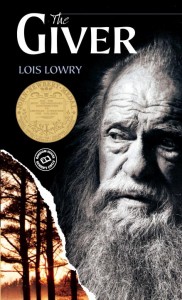
In its most basic form, The Giver is the story of a small group of people who choose to live in a closed society free of pain, war and hunger. For this, they largely give up contact with the outside world, memory of past human experience, and the right of free choice. Every aspect of personal life is totally controlled by a central authority. The complexity of the book increases with every chapter, although the language employed makes it easily accessible to younger readers.  A wealth of discussion topics on society, fairness, freedom, and choice await readers and teachers.

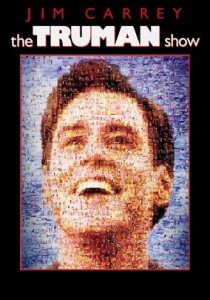
Combining this book with The Truman Show transforms an already substantial book into a large, rich compare and contrast essay/discussion project catering to both auditory, and visual, learners.

Read about The Giver HERE, or get yourself a copy HERE.

the-giverThetrumanshow

posted on

A high school teacher of mine in South Africa, Alan Douglas, once ran a bicycling trip for charity at our school. When giving directions, he said to thunderous laughter, “If you get lost, go back to where you last knew you were”. Sound advice indeed if you are going through a life crisis, struggling through a Science experiment, or finding yourself stumped on an essay. Not quite so sound if you are physically lost on your bicycle! So amusing was this statement, that I remember it vividly some thirty years later. Its basic tenet though, drives to the core of sound learning and teaching and that is to think through problems carefully, and try to find solutions which might not always be obvious at first. Applying knowledge, understanding and/or methodology in one area, might or might not work universally. Being able, and prepared, to apply new thinking to our ever-quickening pace of global change is crucial to our future success. Successfully negotiating this environment is partly tied up in how we think through problems/challenges.

How many people have you met in your life who have had a truly original idea? I would have to say that I have met many people from diverse backgrounds on several continents, and I can probably count true originality on two fingers. Most of us adapt ideas from someone else in one way or another. People continually ask for thinking outside the box. However, the vast amount of creativity, knowledge and information is contained within the box, and that is where we should start. Most ideas outside the box have origins inside the box. Bright sparks of creative genius are truly rare. Creative, useful adaptations of existing ideas occur far more regularly, and have been extremely useful in business, science, the arts and almost every other realm of human endeavor. A key component to thinking creatively entails giving children the tools to think in ways which best unlock existing knowledge for them in ways which lead to creative productivity.

As I sit and think through the reality of an environment changing with ever increasing rapidity, I ponder how I might be able to prepare ten-year-old children to excel in their future life course. A few ideas come to mind. Firstly, all information coming into our brains enabling us to make sensible and logical decisions come from an efficient utilization of our senses. Secondly, everything that we need in life we get from other people in one way or another. Combining these two ideas together, I see my overarching goal as helping students bring all their senses to bear on a problem in an enlightened way, and then giving them the self-confidence to express their opinions and thinking publicly. Therein lies an acceptance of change and all it brings, building up the individual’s self-confidence, and learning how to best utilize our senses.